
Computer vision models rely on accurately labeled visual data to recognize objects, people, text, and environments. However, poor-quality annotations inevitably lead to inaccurate AI predictions and unreliable outcomes in real-world applications. That is why professional data annotation services help businesses create high-quality datasets that improve model accuracy and drastically accelerate AI development.
In this comprehensive guide, we focus specifically on computer vision projects, key annotation workflows, common operational challenges, and practical best practices to help you optimize your machine learning pipeline.
AI Overview: Data annotation services for computer vision involve systematically labeling images and videos to train AI models for object detection, image classification, facial recognition, medical imaging, autonomous vehicles, and automated quality inspection.
Why Accurate Data Annotation Matters in Computer Vision
Artificial intelligence does not naturally understand images, instead, it learns exclusively from labeled visual data provided during training. Because computer vision data annotation forms the baseline for algorithm training, better annotations directly improve overall model accuracy and significantly reduce costly prediction errors. Consequently, when training datasets are annotated with precise spatial boundaries and accurate attributes, the AI demonstrates far stronger real-world performance.
In addition, high-precision training data minimizes the need for iterative model retraining, which ultimately leads to faster AI deployment. Ultimately, accurate annotation forms the foundation of successful computer vision systems.
Common Annotation Techniques Used in Computer Vision
Different computer vision tasks require tailored annotation methods depending on the required level of detail and model architecture.
Bounding Box Annotation
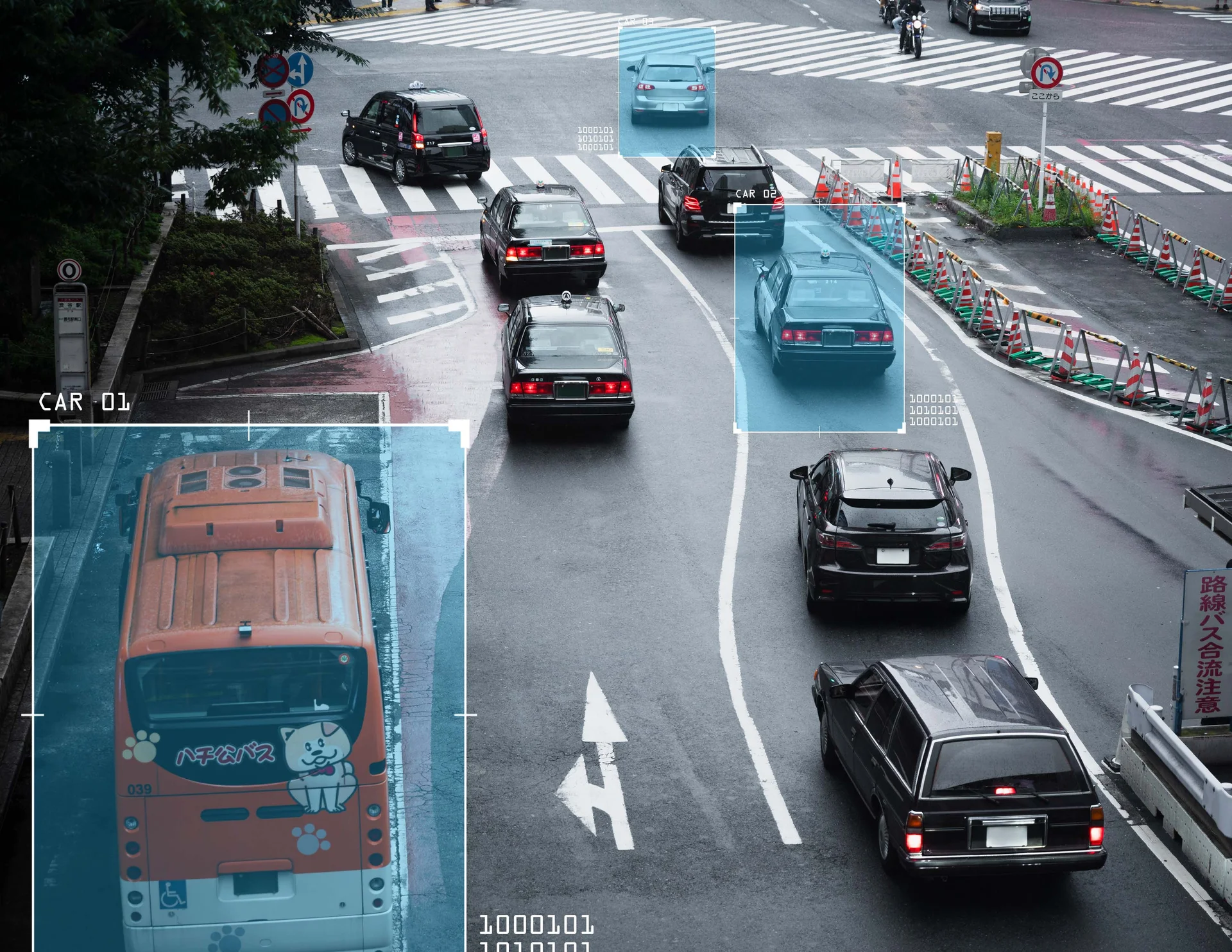
Bounding boxes are rectangular frames drawn around target objects to train object detection models. Furthermore, this method is computationally efficient and ideal for identifying distinct items, such as:
- Vehicles on roadways for traffic monitoring
- Products on retail shelves
- Animals or wildlife in environmental research
Polygon Annotation
When objects feature complex or irregular shapes, simple boxes fall short. Polygon annotation connects sequential points along precise borders to capture exact contours. Common use cases include:
- Mapping roads and lanes for mapping software
- Tracing architectural outlines of buildings
- Highlighting irregular structures in medical images
Semantic Segmentation
Semantic segmentation provides pixel-level labeling, assigning every single pixel in an image to a specific class. Because it offers total scene understanding, it is heavily utilized in:
- Autonomous driving to distinguish road surfaces, sidewalks, and obstacles
- Satellite imagery analysis for land cover classification
Keypoint Annotation
Keypoint annotation tracks strategic landmark points across an object or person to map posture, movement, and features. Therefore, it is critical for:
- Facial recognition systems
- Human pose estimation in sports analytics and security
Image Classification
Unlike spatial annotations, image classification assigns a single label or attribute tag to an entire image. As a result, this baseline technique is commonly applied in:
- Industrial defect detection
- Automated product categorization for e-commerce cataloging
Read more blog : Top Industries Using Data Annotation Services in 2026
Computer Vision Projects That Require Data Annotation Services
Modern computer vision applications rely on robust AI training data across various mission-critical projects:
Autonomous Vehicles
Self-driving technology demands continuous, high-volume video annotation. Models require precise detection of lane markers, traffic signs, cyclists, and pedestrians under varying weather conditions to operate safely.
Healthcare Imaging
In medical diagnostics, machine learning datasets require domain-specific annotation. High-precision labels on MRIs, CT scans, and X-rays enable AI models to assist radiologists in early tumor detection and disease diagnosis.
Retail & E-Commerce
Smart retail platforms utilize image annotation services to streamline operations. Key applications include automated product recognition, real-time shelf inventory monitoring, and visual search engines for online shoppers.
Manufacturing
Automated assembly lines leverage computer vision models for continuous quality inspection. By training on annotated image sets, vision systems spot microscopic surface defects, missing components, and assembly line anomalies in real time.
Security & Surveillance
Advanced security setups rely on real-time visual tracking. Key applications include biometric face recognition, automated intrusion detection, and multi-camera object tracking across large facilities.
Challenges in Computer Vision Data Annotation
Managing large-scale visual data annotation presents several operational bottlenecks. However, implementing structured workflows helps mitigate these risks effectively.
Challenge
Best Practice
Inconsistent labels across teams
Establish clear, standardized annotation guidelines before labeling.
Large datasets creating backlogs
Implement AI-assisted annotation tools to accelerate pre-labeling.
Poor image quality or noise
Perform rigorous data preprocessing and filtering prior to annotation.
Complex object boundaries
Utilize polygon segmentation and tight polyline tracing.
Quality control bottlenecks
Enforce multi-level consensus reviews and automated validation checks.
Maintaining annotation consistency is as important as model selection. Without structured quality assurance, data drift and label noise can quickly compromise model accuracy.
How to Choose the Right Data Annotation Service Provider
Selecting an experienced external partner ensures your computer vision pipeline remains scalable and accurate. Use this strategic checklist when evaluating providers like FiveS Digital:
- Computer vision expertise: Proven track record across diverse annotation types and complex project domains.
- Scalable annotation team: Capability to scale human-in-the-loop workforces up or down based on project timelines.
- Quality assurance process: Multi-tiered QA protocols featuring automated verification and human consensus scoring.
- AI-assisted annotation tools: Integration of smart pre-labeling to lower costs and accelerate delivery times.
- Secure data handling: Adherence to strict enterprise data security policies, compliance standards, and ISO certifications.
- Support for multiple annotation formats: Compatibility with custom export formats (e.g., JSON, XML, COCO, YOLO).
Why High-Quality Annotation Improves AI ROI
Investing in enterprise-grade data annotation services directly impacts business outcomes. First, high-precision training data delivers superior model accuracy, which directly translates to reliable performance in production environments.
Second, clean datasets reduce the need for constant, expensive retraining cycles, thereby lowering overall operational and cloud computing costs. Furthermore, faster model deployment allows organizations to bring AI capabilities to market well ahead of competitors.
By minimizing operational errors and improving end-user experiences, superior data annotation accelerates broader AI adoption and drives measurable digital transformation.
Conclusion
Computer vision models are ultimately only as good as the data used to train them. Therefore, high-quality data annotation services serve as the cornerstone for improving AI accuracy and long-term business outcomes.
By partnering with an experienced annotation partner like FiveS Digital, organizations can confidently accelerate their AI initiatives while maintaining rigorous data quality and security.
Get More Info : https://fivesdigital.com/contact-us/