When a customer calls a business, the first few seconds matter. An IVR may look language-neutral on paper, but the experience can be very different for Hindi-speaking callers. If the caller has to first choose a language, listen to long menu options, and then find the option that matches their problem, frustration can build quickly.
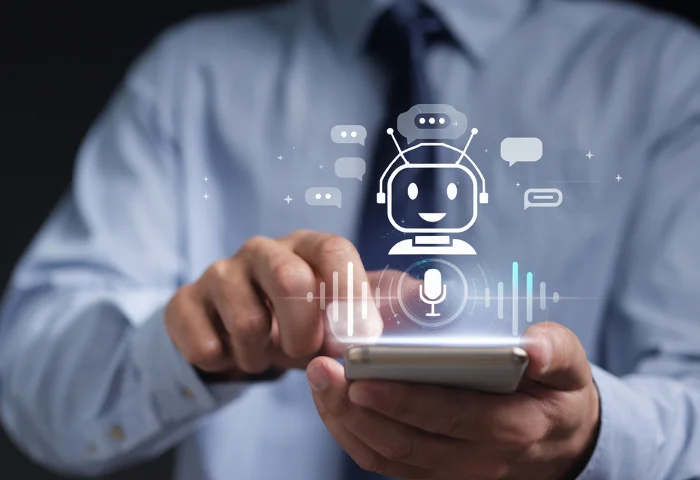
An AI hindi voice generator changes this experience by allowing customers to speak naturally from the beginning. Instead of following a fixed menu, they can explain what they need in their own words.
Why Traditional IVR Frustrates Hindi-Speaking Customers
Traditional IVR systems work through fixed menus. The caller listens to options, presses a number, and moves to the next step. This works well when the customer knows exactly which option to choose. However, it becomes difficult when the customer simply wants to explain a problem.
For Hindi-speaking customers, the process can become even more difficult when the main menu is designed around English terms or business language.
First, the caller may have to select Hindi before they can actually speak. This adds another step before the interaction begins. Then, the menu may use terms that do not match how customers naturally describe their problem.
For example, a customer may want to say, “Mere account se paise kat gaye hain, lekin transaction complete nahi hua.” A traditional IVR may instead ask them to choose between options such as “transaction status,” “payment services,” or “account-related queries.”
The caller now has to understand the system instead of the system understanding the caller.
This can lead to wrong selections, repeated menu options, transfers, and eventually a request to speak to an agent. It also affects the overall customer service voice process, because the first part of the interaction is spent navigating the system rather than solving the customer’s problem.
How AI Hindi Voice Generators Improve the Caller Experience
An AI hindi voice generator takes a different approach. Instead of asking customers to select from a fixed list, it allows them to speak naturally.
The customer can explain the issue in Hindi from the first sentence. The system can then identify the intent behind the request and move the conversation in the right direction.
This makes the interaction feel more like a conversation and less like a menu.
It also helps with the way people actually speak. Hindi conversations often include English words, especially for terms related to banking, payments, technology, insurance, and other services. A customer might switch between Hindi and English in the same sentence without thinking about it.
AI voice systems can be designed to understand this kind of code-switching. They can also ask a follow-up question when the request is unclear instead of simply sending the caller back to the main menu.
For customers, that means less time figuring out which button to press and more time getting their issue understood.
AI Hindi Voice Generator vs Traditional IVR - CSAT Factors Compared
Customer satisfaction is influenced by more than just whether a call eventually reaches an agent. How quickly the system understands the customer, how many times the caller has to repeat themselves, and how natural the interaction feels all matter.

The difference is simple. Traditional IVR asks customers to fit their problem into the system. AI voice interaction allows the system to understand the customer first.
That does not mean every AI interaction will automatically be better. The quality depends on how well the voice system understands Hindi, handles different ways of speaking, and knows when to transfer the call to a human agent. However, for open-ended customer queries, conversational interaction can remove several points of friction.
When Traditional IVR Still Makes Sense
Traditional IVR is not useless. In fact, there are situations where a fixed menu can be faster and more reliable.
Simple, low-ambiguity tasks are a good example. If a customer only needs to confirm an appointment, check a balance, or enter a known reference number, pressing a few keys may be quicker than having a conversation.
Traditional IVR can also make sense for specific regulated or low-volume processes where businesses need a predictable and auditable flow. In these cases, having clearly defined menu options can be useful.
So this is not really a question of completely replacing IVR with AI.
The better approach is to understand which calls need a fixed process and which calls benefit from natural conversation. Businesses can continue using traditional IVR for simple transactions while using an AI Hindi voice experience for customer queries that require more understanding.
Measuring CSAT Impact - What to Track Before and After
Businesses should not decide between traditional IVR and AI voice technology based only on how the system sounds. The real question is whether the customer experience improves.
Start by measuring the first-call resolution rate for Hindi-speaking customers. If customers are getting their issues resolved without being transferred or calling again, that is a strong indicator of improvement.
Next, track time-to-intent. This measures how quickly the system understands what the customer is trying to do. With traditional IVR, this can include the time spent navigating menus. With conversational AI, it can be measured from the beginning of the spoken interaction.
Also track the repeat-call rate within 48 hours. If customers repeatedly call about the same issue, it may indicate that the first interaction did not solve their problem.
These metrics can give businesses a clearer view of how their customer service voice process is performing.
It is also useful to compare CSAT scores for Hindi-speaking callers before and after introducing conversational voice support. Looking at these numbers together gives a better picture than relying on satisfaction surveys alone.
The Best Approach is Usually a Mix of Both
For Hindi-speaking customer bases, natural voice interaction can remove many of the frustrations associated with traditional IVR. Customers can speak in their own words, avoid long menu trees, and get help without first learning how the system works.
Still, that does not mean businesses need to remove every existing IVR flow. Traditional menus can continue to handle simple and predictable requests, while an AI hindi voice generator can manage conversations where understanding customer intent matters more.
The goal is not to replace one system with another. It is to use each where it works best.
Talk to FiveS Digital about deploying an AI Hindi voice generator alongside your existing support setup.